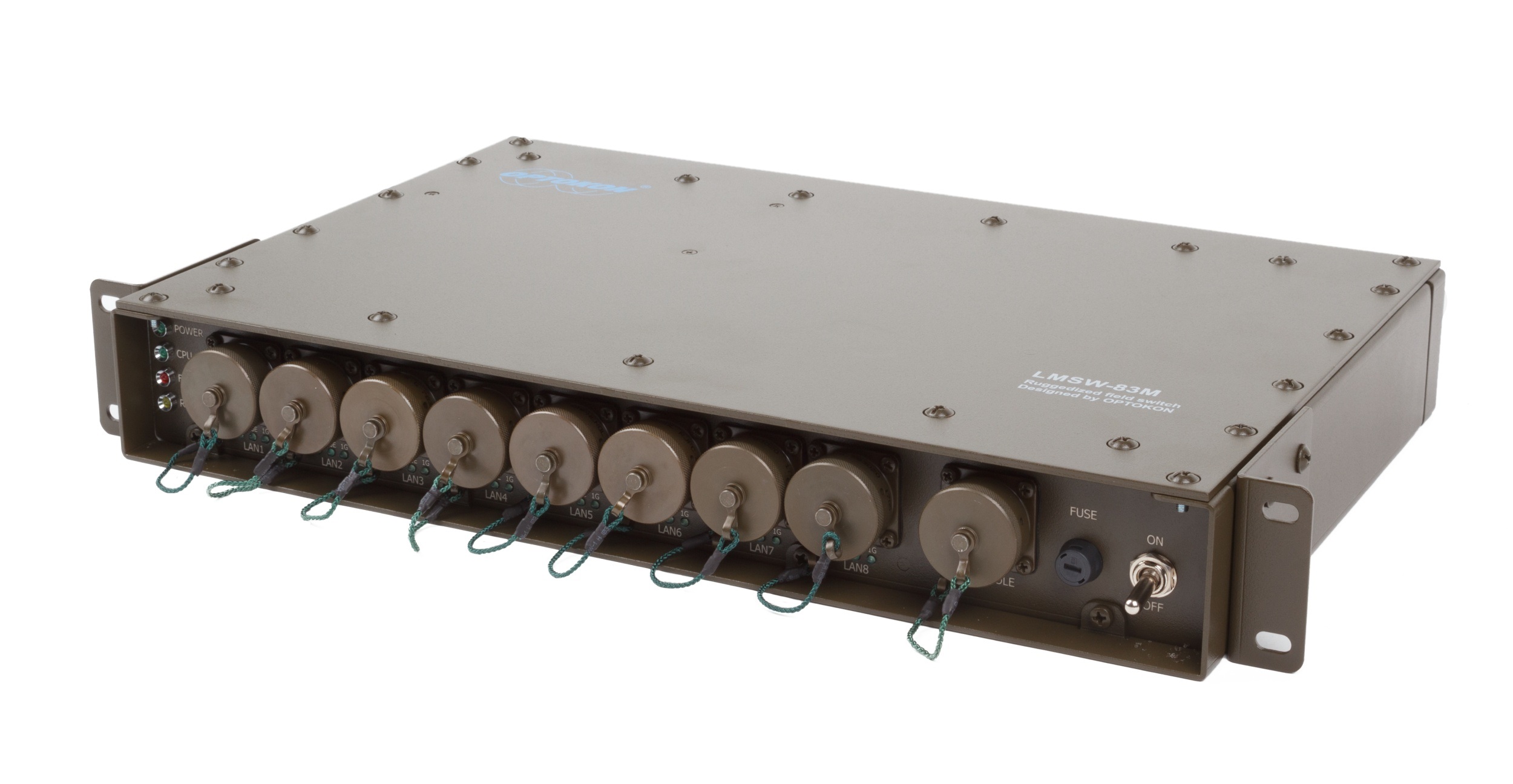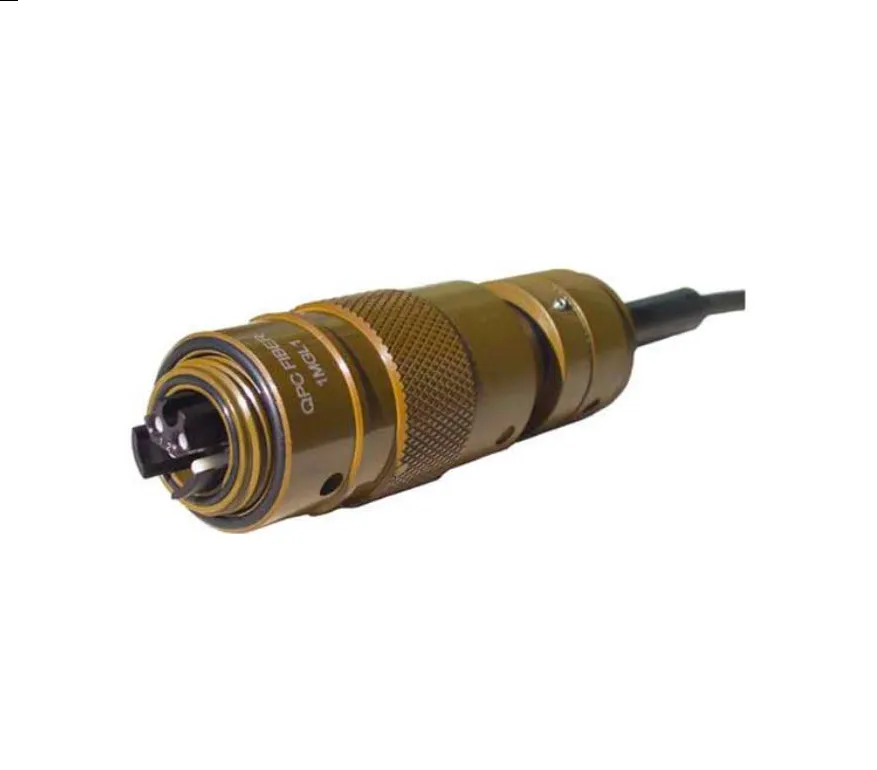
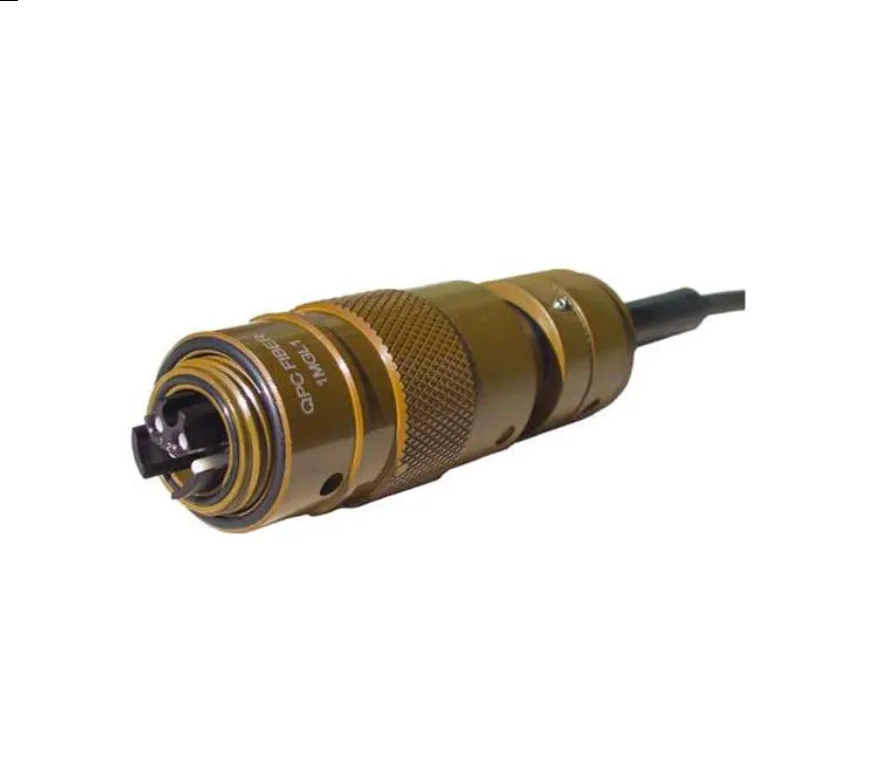
TFOCA series hermaphroditic physical-contact connectors. These connectors are designed for fiber-optic cables, especially for environments with increased requirements: tactical networks, harsh external conditions (moisture, dust, vibration, temperature). For example, the Optokon website states: “TFOCA optical cables are intended for connecting tactical network nodes ... the connector includes an optical interface with four standard 2.5 mm ferrules ... the TFOCA hermaphroditic coupling eliminates the need for adapters and male and female connector halves.”
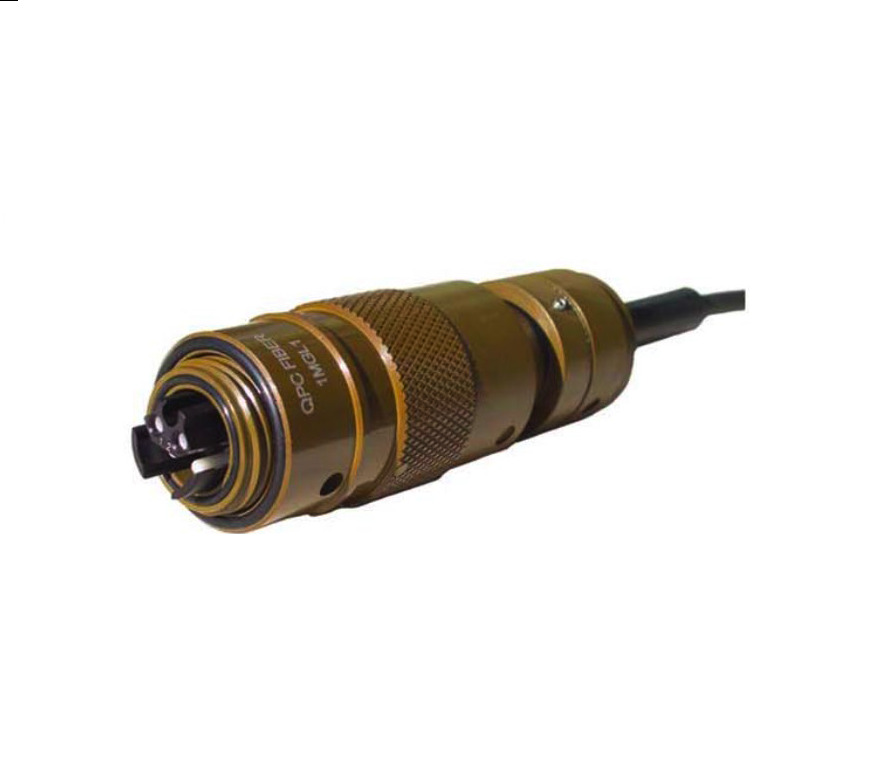
Main advantages of this series:
- Hermaphroditic (no “male/female” halves) design – any connector can mate with an identical one without the need for a “plug/socket”.
- Physical contact (ceramic ferrule, alignment sleeve) ensures a reliable optical connection with low loss and good return reflection characteristics.
- Designed for harsh environments: wide temperature range, moisture, dust, shock, vibration, high mating/de-mating cycles.
- Field-service capability (disassembly/maintenance on site).
These characteristics make the TFOCA series ideal for: military, industrial, mobile, and emergency systems where standard connectors cannot withstand the load.
Comparative characteristics of the models
Below is a comparative table of the key TFOCA series models (TFOCA I, TFOCA II, TFOCA III) with their main characteristics.
Model | Channels / configuration | Maximum insertion loss¹ | Operating temperature range | Main features |
TFOCA I | 2-channel (basic) | ~2.00 dB (SM), ~1.50 dB (MM) | approximately –10 °C … +75 °C | First version, compatibility with legacy systems |
TFOCA II | 4-channel, 12-channel | ≤ 0.75 dB maximum | –46 °C … +71 °C | Improved optics, hermaphroditic design |
TFOCA III | 6 / 24-channel (higher density) | ~0.30–0.40 dB typical | –46 °C … +71 °C | For high density, modern design |
¹ Insertion loss — typical/maximum value.
Main differences
- Number of channels: from 2 (TFOCA I) to 24 (TFOCA III) — the choice depends on the fiber count needed.
- Optical loss: the series improved over time — lower maximum loss, better optics.
- Mechanics and materials: improved alignment systems, housing materials, corrosion protection, and field-service capability.
- Purpose: TFOCA I — for lighter scenarios, II and III — for heavy-duty environments, higher densities, and stricter requirements.
Model features and applications
Features
- Hermaphroditic design – allows easy cable-to-cable connection without adapters or distinguishing “plug/socket.” This speeds up deployment in field or emergency conditions.
- Physical contact (PC / UPC polished ceramic ferrules + alignment sleeves) – ensures optimal light transmission, low loss, and high reliability.
- Strength and durability: tested according to military standards (MIL-STD, EIA/TIA) for vibration, shock, immersion, cable bending. For example: TFOCA III is rated for ≥ 400 lb (≈180 kg) cable pull strength.
- Field-service capability: for example, a removable front insert (end cap) allows on-site maintenance and cleaning.
- Sealing and protection: many models comply with IP ratings or military standards for dust/moisture protection.
Applications
- Tactical networks (military, emergency)
- Industrial harsh environments (mining, oil & gas, offshore platforms)
- Mobile / temporary installations (repair, field installations, on-site deployment)
- Applications requiring a high number of fibers (multichannel systems)
Selection recommendations
- Determine the number of channels / fibers you need — choose a model with the appropriate count.
- Consider the fiber type (singlemode or multimode) and the required insertion loss — choose lower-loss models if this is critical.
- Evaluate the operating environment — will there be moisture, dust, shock, extreme temperatures? If yes, choose the more robust versions (TFOCA II/III).
- Ensure field-service capability — important when no easy technical support is available.
- Check compatibility and standards, especially if integrating with existing systems or legacy equipment.
FAQ (Frequently Asked Questions)
Q1: What does a “hermaphroditic” connector mean?
A: It is a connector without “male/female” halves — any side can mate with an identical one. This simplifies installation and reduces the number of connector types.
Q2: What are the advantages of physical contact (PC) in a fiber-optic connector?
A: Physical contact means the ferrules of the fibers are pressed together through ceramic/metal alignment sleeves. This provides minimal signal loss and high-quality connection.
Q3: What is the difference between TFOCA II and TFOCA III?
A: The main differences are the number of channels (TFOCA III supports higher-density configurations such as 6 or 24 channels), better optical performance, and updated materials. See the table above.
Q4: Can these connectors be used in field or harsh environments?
A: Yes, these models are specifically designed for heavy-duty conditions: wide temperature range, protection from moisture, dust, shock, vibration. For example, operating temperature –46 °C ... +71 °C for TFOCA II/III.
Q5: What should be considered when choosing?
A: Number of channels, fiber type, acceptable insertion loss, durability (mating cycles), protection level (IP rating, standards), and field-service capability.
Q6: Are these connectors compatible with existing systems?
A: The TFOCA series provides broad compatibility with military/industrial standards (e.g., MIL-C-83526). However, it's recommended to verify specific configurations beforehand to avoid incompatibility.